One of the interesting things about Worku is what happens when a constraint arrives before meaning does.
Sometimes a Wordle guess leaves me with a word I don’t know, or barely know, or chose only because it helped solve the puzzle. Then that word becomes mandatory.
At that point, I’m not starting from definition. I’m starting from sound, shape, tone, position, and whatever associations the surrounding words create. I may place the strange word where it seems to fit emotionally or rhythmically and only later learn what it actually means.
Robo’s recent poem gave me a good example:
The DANCE will not SPOIL
The GRIFT and MIRTH of TITIR
At the RITZY club
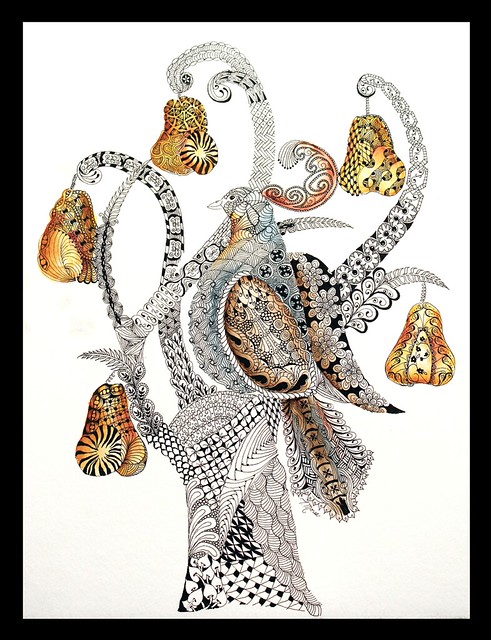
I didn’t know TITIR. Looking it up afterward, I learned that it is a traditional name for a partridge or francolin bird. What interested me wasn’t whether the word had been “used correctly,” but the fact that it had already found a place in the poem before I knew what it meant.
That feels especially interesting in a constraint form like haiku, where there is so little room to maneuver. Every word has pressure on it. An unfamiliar constraint can become almost like found material: something I have to incorporate into the poem before I fully understand it.
Sometimes the result is awkward. Sometimes the meaning turns out to be completely different from what I imagined. But occasionally there’s a surprising confluence: the guessed word, the other constraints, the rhythm of the poem, and the meaning I discover afterward all seem to occupy roughly the same imaginative space.
That’s one of the pleasures of Worku for me. The constraint doesn’t simply limit the poem. It can create meaning I would never have gone looking for.
And there’s something nicely haiku-like about that process itself: attention first, understanding later.